The Wake-Up Call Every Parent Needs to Hear
Picture this: Your 8-year-old comes home from school in tears because they didn't make the soccer team. Or your teenager is devastated after a friendship breakup. Or your child freezes during a presentation and refuses to ever try again.
As parents, our instinct is to swoop in, fix the problem, and shield our children from pain. But here's the uncomfortable truth: we can't protect our kids from every disappointment, failure, or challenge they'll face.
What we CAN do is give them something far more valuable—the ability to bounce back stronger every single time.
Welcome to the world of resilience, the single most important skill your child needs to thrive in today's unpredictable world.
What is Resilience (And Why Does It Matter More Than Ever)?
Resilience isn't about being tough or never feeling sad. It's about developing the mental and emotional flexibility to navigate life's inevitable ups and downs with confidence and grace.
Think of resilience as your child's emotional immune system. Just like a strong immune system helps the body fight off illness, emotional resilience helps children:
- Recover from setbacks and disappointments
- Manage stress and anxiety effectively
- Adapt to change and new situations
- Build healthy relationships
- Develop problem-solving skills
- Maintain a positive outlook even during tough times
In a world where children face unprecedented pressures—from social media comparisons to academic competition, from climate anxiety to global uncertainty—resilience isn't just nice to have. It's essential for their mental health and future success.
The Science Behind Resilient Kids
Research shows that resilient children share common characteristics that can be taught and nurtured:
1. Strong Emotional Regulation
Resilient kids can identify their feelings and have healthy ways to express and manage them. They don't suppress emotions, but they also don't let emotions control their actions.
2. Problem-Solving Mindset
Instead of seeing obstacles as insurmountable walls, resilient children view challenges as puzzles to solve. They ask "What can I do about this?" rather than "Why is this happening to me?"
3. Growth Mindset
They understand that abilities can be developed through effort and practice. Failure isn't a reflection of their worth—it's feedback for improvement.
4. Strong Support Network
Resilient kids know they're not alone. They have trusted adults and friends they can turn to when times get tough.
5. Sense of Purpose
They have activities, interests, or values that give their life meaning beyond themselves.
The 5 Pillars of Raising Resilient Kids
Pillar 1: Model Resilience Yourself
Children learn more from what we do than what we say. When you face a setback at work, do you catastrophize or do you problem-solve? When you make a mistake, do you beat yourself up or do you show self-compassion?
Action Step: Narrate your resilience process out loud. "I'm really disappointed I didn't get that promotion, and it's okay to feel sad about it. Tomorrow, I'm going to ask for feedback so I can improve for next time."
Pillar 2: Let Them Struggle (Within Reason)
This is the hardest one for most parents. We want to prevent our children from experiencing pain, but struggle is where growth happens. When we constantly rescue our kids, we send the message: "I don't think you can handle this."
Action Step: Before jumping in to help, ask yourself: "Is my child in danger, or just uncomfortable?" If they're just uncomfortable, step back and let them work through it. Be available for support, but don't take over.
Pillar 3: Teach Emotional Intelligence
Resilient kids can name their emotions, understand what triggers them, and have healthy coping strategies. This doesn't happen by accident—it requires intentional teaching.
Action Step: Create an "emotion vocabulary" in your home. Go beyond "happy," "sad," and "angry." Introduce words like frustrated, overwhelmed, disappointed, anxious, proud, and content. Help your child identify what they're feeling and validate those emotions.
Pillar 4: Reframe Failure as Feedback
In resilient families, failure isn't shameful—it's informative. Every mistake is a learning opportunity, every setback is a chance to try a different approach.
Action Step: At dinner, share your own "failure of the day" and what you learned from it. Make it a family tradition to celebrate effort and learning, not just outcomes.
Pillar 5: Build Their Confidence Through Competence
Confidence doesn't come from constant praise—it comes from mastering challenges. Give your children age-appropriate responsibilities and let them experience the satisfaction of accomplishment.
Action Step: Assign meaningful household tasks that contribute to the family. A 5-year-old can set the table, a 10-year-old can make their own lunch, a teenager can manage their own laundry. The message: "You are capable."
Real-World Scenarios: Resilience in Action
Scenario 1: The Bad Grade
Non-Resilient Response: "This is terrible! You need to study harder. No screen time until your grades improve."
Resilient Response: "I can see you're disappointed. Let's figure out what happened. Was the material confusing? Did you run out of time? What could you do differently next time? How can I support you?"
Scenario 2: Friendship Drama
Non-Resilient Response: "Those kids are mean. I'm going to call their parents." Or "Just ignore them and find new friends."
Resilient Response: "Friendship conflicts are really painful. Let's talk about what happened. How do you think your friend was feeling? What are your options here? What feels right to you?"
Scenario 3: Fear of Trying Something New
Non-Resilient Response: "Don't be silly, there's nothing to be scared of!" Or "Fine, you don't have to do it."
Resilient Response: "It's normal to feel nervous about new things. I feel that way too sometimes. What's the worst that could happen? What's the best that could happen? What's one small step you could take to try it?"
The Long-Term Impact of Resilience
When you invest in building your child's resilience, you're not just helping them handle today's challenges. You're setting them up for lifelong success.
Resilient children become adults who:
- Navigate career setbacks with grace and determination
- Build and maintain healthy relationships
- Manage stress without burning out
- Take calculated risks and pursue their dreams
- Recover from life's inevitable hardships
- Find meaning and purpose even in difficult times
Common Mistakes Parents Make (And How to Avoid Them)
Mistake #1: Praising Talent Instead of Effort
"You're so smart!" sounds positive, but it creates a fixed mindset. Instead, try: "I love how hard you worked on that!"
Mistake #2: Solving All Their Problems
Resist the urge to be the hero. Ask guiding questions instead: "What do you think you could try?"
Mistake #3: Dismissing Their Feelings
"You're fine, it's not a big deal" invalidates their experience. Try: "I can see this really matters to you. Tell me more."
Mistake #4: Protecting Them From All Discomfort
Discomfort is where growth happens. Let them experience age-appropriate challenges.
Mistake #5: Expecting Perfection
Perfectionism is the enemy of resilience. Celebrate progress, not perfection.
Age-Appropriate Resilience Building
Preschoolers (3-5 years):
- Name and validate emotions
- Teach simple problem-solving ("What could we try?")
- Allow safe struggles (putting on shoes, opening containers)
- Read books about characters overcoming challenges
Elementary Age (6-11 years):
- Encourage trying new activities
- Teach coping strategies (deep breathing, positive self-talk)
- Discuss mistakes and what was learned
- Give meaningful responsibilities
- Help them identify their strengths
Teenagers (12-18 years):
- Allow natural consequences (within safety limits)
- Discuss real-world challenges and solutions
- Encourage independence and decision-making
- Be a consultant, not a manager
- Share your own resilience stories
Your Next Steps: The Resilience Roadmap
Building resilience in your children is one of the greatest gifts you can give them. It's not about being perfect—it's about being intentional.
Start small:
- Choose one pillar to focus on this week
- Notice one opportunity each day to let your child struggle productively
- Have one conversation about emotions and coping strategies
- Model your own resilience in action
- Celebrate effort and learning, not just outcomes
Ready to Dive Deeper?
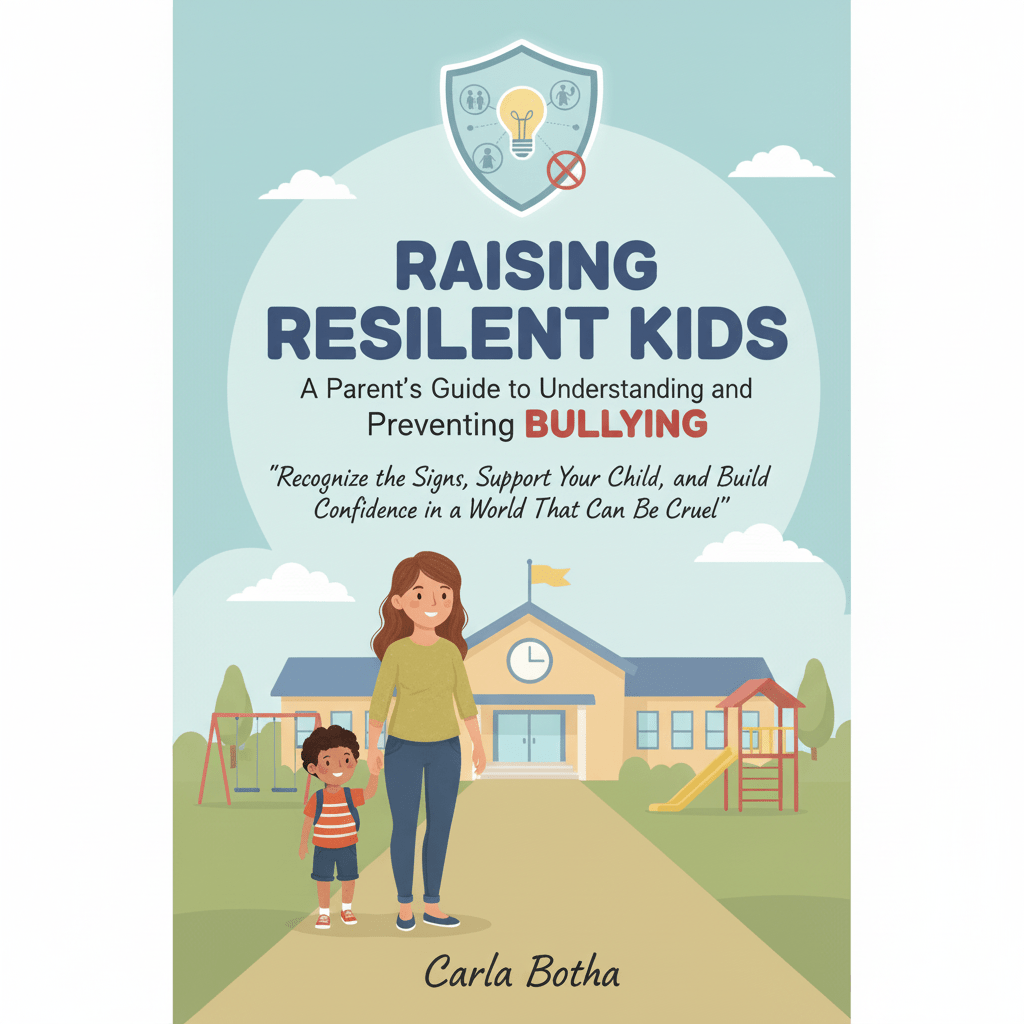
If you're serious about raising emotionally strong, confident children who can handle whatever life throws their way, our comprehensive guide "Raising Resilient Kids" gives you everything you need.
Inside, you'll find:
- Detailed strategies for each age group
- Printable worksheets and activities
- Scripts for difficult conversations
- Real-world scenarios with step-by-step solutions
- Tools to assess and build your child's resilience
- Self-care strategies for parents (because you can't pour from an empty cup)
The truth is, the world isn't getting easier. But your child can get stronger.
Every day you wait is a missed opportunity to equip them with skills they'll use for the rest of their lives. Start building their resilience today—because the best time to prepare for a storm is before it arrives.
Get your copy of "Raising Resilient Kids" now and start your journey toward raising confident, capable children who thrive in the face of challenges.
Remember: You don't have to be a perfect parent to raise resilient kids. You just have to be an intentional one.